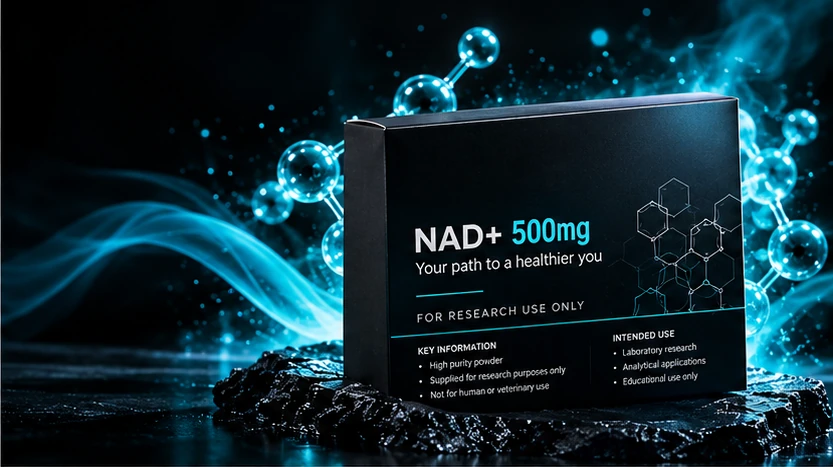
What is NAD+?
Nicotinamide adenine dinucleotide (NAD+) is a coenzyme found throughout living cells. It is not a peptide. Its oxidised form, NAD+, and reduced form, NADH, form a redox pair used in many biochemical reactions.
NAD+ and redox biology
In metabolism, NAD+ can accept electrons and become NADH. This cycling is central to pathways that transfer chemical energy and maintain cellular redox balance. Researchers therefore measure NAD-related metabolites when studying mitochondrial and metabolic systems.
NAD+-consuming enzymes
NAD+ also acts as a substrate for enzyme families including sirtuins, PARPs and CD38. These pathways connect NAD biology with research into signalling, DNA-damage responses, chromatin biology and cellular stress.
What does NAD+ research ask?
Research may examine NAD+ concentration, NAD+/NADH ratios, precursor pathways, enzyme activity or how these variables change in particular experimental models. Different approaches answer different questions, so results should not be collapsed into a single claim about “NAD levels”.
Peptrion catalogue context
Peptrion lists NAD+ as a research material for laboratory use. It is presented separately from peptide products because NAD+ is a coenzyme, not a peptide. Review the product record and documentation for the exact research presentation.