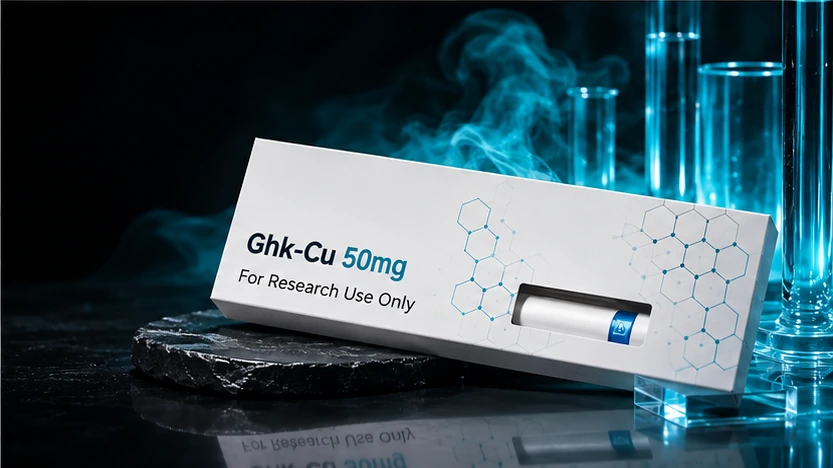
Two different research areas
GHK-Cu and NAD+ sit in different biochemical categories, but both appear frequently in cellular and biochemical research. Their chemistry, experimental handling and literature should be considered separately.
GHK-Cu & copper-peptide research
GHK-Cu is a copper-binding tripeptide studied in biochemical and cellular models. Research may examine peptide–metal interactions, signalling and cell-model responses.
See the dedicated What is GHK-Cu? guide for a more focused overview.
NAD+ biochemical research
Nicotinamide adenine dinucleotide is central to redox chemistry and also participates in enzyme pathways involving sirtuins and PARPs. Research areas include bioenergetics, mitochondrial function, redox biology and DNA-repair pathways.
See the dedicated What is NAD+? guide for additional context.
Current Peptrion materials
Explore GHK-Cu 50mg and NAD+ 500mg. Product records and available documentation describe the supplied research materials; they should not be treated as proof of a clinical or cosmetic effect.
Interpreting evidence
When reading cellular or biochemical research, check the model, concentration, controls, analytical method and whether the material studied matches the material being discussed.